
Roku's Silent Strategy: How a Major Free Content Upgrade Reinforces Its Dominance in the Streaming Ecosystem
In the world of commerce, few gestures are as universally appreciated as the unexpected freebie. Whether it's a complimentary upgrade on a service you already pay for or an unanticipated gift at checkout, these moments transcend mere transaction. They are powerful psychological tools, carefully deployed to forge "emotional loyalty"—a bond far more resilient than one based solely on price or necessity. This strategy is about creating goodwill, fostering a sense of being valued, and strategically embedding a brand into the daily fabric of a consumer's life.
The streaming industry, in a constant state of flux with subscribers perpetually rotating between platforms, has become a masterclass in applying this principle. As viewers chase hit shows, seasonal sports, or simply look to trim monthly budgets, retention is a paramount challenge. In response, platforms are increasingly leveraging expansive free, ad-supported content tiers. The goal is dual: to serve as a top-of-funnel acquisition tool for new users and, perhaps more ingeniously, to act as a retention net. This "free program" acts as an ecosystem trap, keeping users within the platform's environment even when they pause or cancel a premium subscription. Data underscores the potency of this approach: a 2025 ebbo study revealed that 76% of consumers would remain in a brand's free program even while contemplating cancellation of their paid tier.
It is within this strategic landscape that Roku, a titan of streaming infrastructure, has executed a characteristically quiet yet significant maneuver: the rollout of a substantial free content upgrade for all users of Roku TVs and Roku players.
The Upgrade: Nine New Channels, Zero Additional Cost
Following its established pattern of silent enhancements, Roku has significantly bolstered its free offering with the addition of nine new live channels to The Roku Channel app, as first reported by Cord Cutters News. These are not on-demand libraries but linear, scheduled channels—part of the booming Free Ad-Supported Television (FAST) sector—that mimic the experience of traditional cable TV, complete with commercial breaks, but at no monetary cost to the viewer.
The new lineup is strategically curated to appeal to a broad spectrum of tastes, demonstrating Roku's understanding of its diverse 90-million-strong household base:
Channel 429, "Pokémon": A 24/7 destination for anime and nostalgia fans.
Channel 823, "The Bernie Mac Show" & Channel 832, "Blossom": Classic sitcoms offering comfort viewing.
Channel 822, "America’s Funniest Home Videos": Broad-audience, evergreen viral content.
Channel 197, Willow Sports: Catering to the dedicated international cricket audience.
Channel 372, Fuel TV: Targeting enthusiasts of action sports like skateboarding and motocross.
Channel 371, "Felicity" & Channel 829, "Cougar Town": Drama and comedy series anchored by recognizable stars.
Channel 496, MeatEater: A niche channel dedicated to outdoor hunting and culinary content, building on a passionate community.
Accessibility is key to the upgrade's impact. Users need not download a new app or enter payment details. The channels are automatically integrated into the existing "Live TV" section of The Roku Channel app, which comes pre-installed on every Roku device, ensuring frictionless discovery and engagement.
A Pattern of Generosity: Building the World's Largest FAST Platform
This latest addition is not an isolated event but part of a consistent, growth-oriented content strategy. Just in December 2025, Roku similarly expanded its lineup with 11 channels, including BBC News, Tennis+, PBS Genealogy, and classic series like Home Improvement and My Wife and Kids. Through these recurring, incremental upgrades, The Roku Channel has solidified its position as a behemoth in the FAST space, now boasting over 500 free live TV channels alongside its massive on-demand library, as noted by Pocket Lint.
This relentless expansion serves a critical purpose: it transforms The Roku Channel from a simple app into a comprehensive entertainment destination. By offering a vast, constantly refreshed catalog of free content, Roku ensures there is always something to watch, dramatically increasing the likelihood that a user will default to its platform—whether they are an active premium subscriber on a break or a cord-cutter seeking to minimize monthly bills.
The Master Plan: Hardware as a Loss Leader for a Profitable Platform
To understand the brilliance of these free upgrades, one must examine Roku's foundational business model. The company, founded in 2002, initially made its name by selling hardware—streaming sticks and boxes—that gave older televisions access to the nascent streaming world. Over time, this strategy evolved into a masterstroke of platform economics.
Roku now operates two distinct segments:
Devices: This hardware division often operates at a strategic loss. In Q3 2025, it reported a gross loss of $23 million with a negative 16% margin. Roku sells its players and licenses its OS to TV manufacturers (Roku TVs) not to profit from the sale, but to place a powerful gateway into millions of living rooms.
Platform: This is the profit engine. It encompasses advertising revenue (from The Roku Channel and the home screen), content distribution deals, and subscription revenue shares. In the same Q3 2025 period, this segment generated $1.065 billion in revenue with a robust 51.5% profit margin.
The model is clear: use affordable, ubiquitous hardware to achieve colossal scale, then monetize that captive audience through high-margin platform services. The recent announcement that Roku has reached 90 million active streaming households globally is a testament to the model's success. As CEO Anthony Wood stated, this scale grants Roku unmatched engagement and a dominant position in the U.S. TV operating system market.
Every free channel added is an investment in this platform. It increases viewer hours, enhances the stickiness of the ecosystem, and creates more premium advertising inventory. It is a customer loyalty play funded by the immense profitability of the platform itself.
Strategic Outlook and Technical Perspective
For investors, Roku’s free content strategy is a core component of its competitive moat. It deepens the engagement trench around its massive user base, making the platform increasingly indispensable and harder for competitors to dislodge. While the stock may experience volatility tied to ad market cycles, the fundamental strategy of scaling the user base and monetizing engagement through a superior, content-rich platform remains sound.
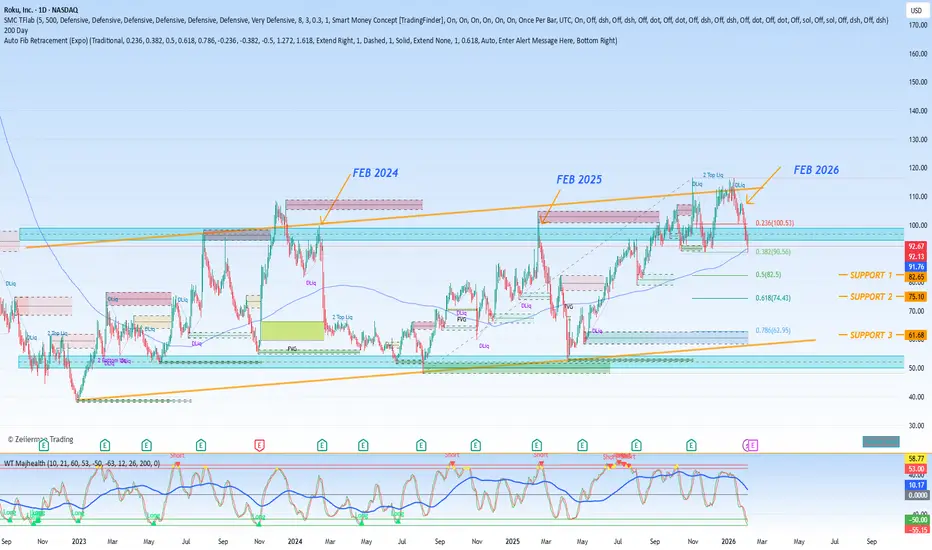
From a technical analysis standpoint, following recent market movements, key Fibonacci retracement levels from the stock's prior major trend suggest the following important support zones where buyers may regain conviction:
Primary Support Zone: $74.43 (0.618 Fibonacci level).
Secondary Support Zone: $82.50 (0.5 Fibonacci level).
Deep Support Zone: $62.95 (0.786 Fibonacci level).
These levels represent areas where the long-term growth narrative tied to Roku's scale and platform monetization may be re-evaluated against near-term valuation pressures.
Conclusion: The Quiet Build of an Entertainment Juggernaut
Roku's latest free channel rollout is far more than a pleasant surprise for users. It is a calculated move in a long-term game of ecosystem dominance. By continuously enriching its free tier, Roku fortifies its role as the central hub of the streaming experience—a destination where users begin and end their viewing journey, regardless of their subscription status. This strategy of cultivating emotional loyalty through consistent, free value not only retains users but actively grows the platform's most valuable asset: its attention-rich, scalable audience. In the high-stakes battle for the living room, Roku is playing a deep and patient game, and its "free" gifts are among its most powerful weapons.
In the world of commerce, few gestures are as universally appreciated as the unexpected freebie. Whether it's a complimentary upgrade on a service you already pay for or an unanticipated gift at checkout, these moments transcend mere transaction. They are powerful psychological tools, carefully deployed to forge "emotional loyalty"—a bond far more resilient than one based solely on price or necessity. This strategy is about creating goodwill, fostering a sense of being valued, and strategically embedding a brand into the daily fabric of a consumer's life.
The streaming industry, in a constant state of flux with subscribers perpetually rotating between platforms, has become a masterclass in applying this principle. As viewers chase hit shows, seasonal sports, or simply look to trim monthly budgets, retention is a paramount challenge. In response, platforms are increasingly leveraging expansive free, ad-supported content tiers. The goal is dual: to serve as a top-of-funnel acquisition tool for new users and, perhaps more ingeniously, to act as a retention net. This "free program" acts as an ecosystem trap, keeping users within the platform's environment even when they pause or cancel a premium subscription. Data underscores the potency of this approach: a 2025 ebbo study revealed that 76% of consumers would remain in a brand's free program even while contemplating cancellation of their paid tier.
It is within this strategic landscape that Roku, a titan of streaming infrastructure, has executed a characteristically quiet yet significant maneuver: the rollout of a substantial free content upgrade for all users of Roku TVs and Roku players.
The Upgrade: Nine New Channels, Zero Additional Cost
Following its established pattern of silent enhancements, Roku has significantly bolstered its free offering with the addition of nine new live channels to The Roku Channel app, as first reported by Cord Cutters News. These are not on-demand libraries but linear, scheduled channels—part of the booming Free Ad-Supported Television (FAST) sector—that mimic the experience of traditional cable TV, complete with commercial breaks, but at no monetary cost to the viewer.
The new lineup is strategically curated to appeal to a broad spectrum of tastes, demonstrating Roku's understanding of its diverse 90-million-strong household base:
Channel 429, "Pokémon": A 24/7 destination for anime and nostalgia fans.
Channel 823, "The Bernie Mac Show" & Channel 832, "Blossom": Classic sitcoms offering comfort viewing.
Channel 822, "America’s Funniest Home Videos": Broad-audience, evergreen viral content.
Channel 197, Willow Sports: Catering to the dedicated international cricket audience.
Channel 372, Fuel TV: Targeting enthusiasts of action sports like skateboarding and motocross.
Channel 371, "Felicity" & Channel 829, "Cougar Town": Drama and comedy series anchored by recognizable stars.
Channel 496, MeatEater: A niche channel dedicated to outdoor hunting and culinary content, building on a passionate community.
Accessibility is key to the upgrade's impact. Users need not download a new app or enter payment details. The channels are automatically integrated into the existing "Live TV" section of The Roku Channel app, which comes pre-installed on every Roku device, ensuring frictionless discovery and engagement.
A Pattern of Generosity: Building the World's Largest FAST Platform
This latest addition is not an isolated event but part of a consistent, growth-oriented content strategy. Just in December 2025, Roku similarly expanded its lineup with 11 channels, including BBC News, Tennis+, PBS Genealogy, and classic series like Home Improvement and My Wife and Kids. Through these recurring, incremental upgrades, The Roku Channel has solidified its position as a behemoth in the FAST space, now boasting over 500 free live TV channels alongside its massive on-demand library, as noted by Pocket Lint.
This relentless expansion serves a critical purpose: it transforms The Roku Channel from a simple app into a comprehensive entertainment destination. By offering a vast, constantly refreshed catalog of free content, Roku ensures there is always something to watch, dramatically increasing the likelihood that a user will default to its platform—whether they are an active premium subscriber on a break or a cord-cutter seeking to minimize monthly bills.
The Master Plan: Hardware as a Loss Leader for a Profitable Platform
To understand the brilliance of these free upgrades, one must examine Roku's foundational business model. The company, founded in 2002, initially made its name by selling hardware—streaming sticks and boxes—that gave older televisions access to the nascent streaming world. Over time, this strategy evolved into a masterstroke of platform economics.
Roku now operates two distinct segments:
Devices: This hardware division often operates at a strategic loss. In Q3 2025, it reported a gross loss of $23 million with a negative 16% margin. Roku sells its players and licenses its OS to TV manufacturers (Roku TVs) not to profit from the sale, but to place a powerful gateway into millions of living rooms.
Platform: This is the profit engine. It encompasses advertising revenue (from The Roku Channel and the home screen), content distribution deals, and subscription revenue shares. In the same Q3 2025 period, this segment generated $1.065 billion in revenue with a robust 51.5% profit margin.
The model is clear: use affordable, ubiquitous hardware to achieve colossal scale, then monetize that captive audience through high-margin platform services. The recent announcement that Roku has reached 90 million active streaming households globally is a testament to the model's success. As CEO Anthony Wood stated, this scale grants Roku unmatched engagement and a dominant position in the U.S. TV operating system market.
Every free channel added is an investment in this platform. It increases viewer hours, enhances the stickiness of the ecosystem, and creates more premium advertising inventory. It is a customer loyalty play funded by the immense profitability of the platform itself.
Strategic Outlook and Technical Perspective
For investors, Roku’s free content strategy is a core component of its competitive moat. It deepens the engagement trench around its massive user base, making the platform increasingly indispensable and harder for competitors to dislodge. While the stock may experience volatility tied to ad market cycles, the fundamental strategy of scaling the user base and monetizing engagement through a superior, content-rich platform remains sound.
From a technical analysis standpoint, following recent market movements, key Fibonacci retracement levels from the stock's prior major trend suggest the following important support zones where buyers may regain conviction:
Primary Support Zone: $74.43 (0.618 Fibonacci level).
Secondary Support Zone: $82.50 (0.5 Fibonacci level).
Deep Support Zone: $62.95 (0.786 Fibonacci level).
These levels represent areas where the long-term growth narrative tied to Roku's scale and platform monetization may be re-evaluated against near-term valuation pressures.
Conclusion: The Quiet Build of an Entertainment Juggernaut
Roku's latest free channel rollout is far more than a pleasant surprise for users. It is a calculated move in a long-term game of ecosystem dominance. By continuously enriching its free tier, Roku fortifies its role as the central hub of the streaming experience—a destination where users begin and end their viewing journey, regardless of their subscription status. This strategy of cultivating emotional loyalty through consistent, free value not only retains users but actively grows the platform's most valuable asset: its attention-rich, scalable audience. In the high-stakes battle for the living room, Roku is playing a deep and patient game, and its "free" gifts are among its most powerful weapons.

Отказ от ответственности
Информация и публикации не предназначены для предоставления и не являются финансовыми, инвестиционными, торговыми или другими видами советов или рекомендаций, предоставленных или одобренных TradingView. Подробнее читайте в Условиях использования.
Отказ от ответственности
Информация и публикации не предназначены для предоставления и не являются финансовыми, инвестиционными, торговыми или другими видами советов или рекомендаций, предоставленных или одобренных TradingView. Подробнее читайте в Условиях использования.