Pullback by Candle BodyThe Pullback Indicator version 0.2
Identifies pullbacks by checking if the current candle's body is lower than the previous candle's low for a bearish pullback or higher than the previous candle's high for a bullish pullback. Once a pullback has been identified, the Indicator marks the lowest low or highest high of the trend with a circle.
NOTE it's not fully working as expected as it lacks trend analysis in its code, resulting in it indicating pullbacks in the opposite direction of the trend, such as bullish pullbacks in a bullish trend or bearish pullbacks in a bearish trend. This is a work in progress, maybe it will be "improved" in the future.
Поиск скриптов по запросу "candle"

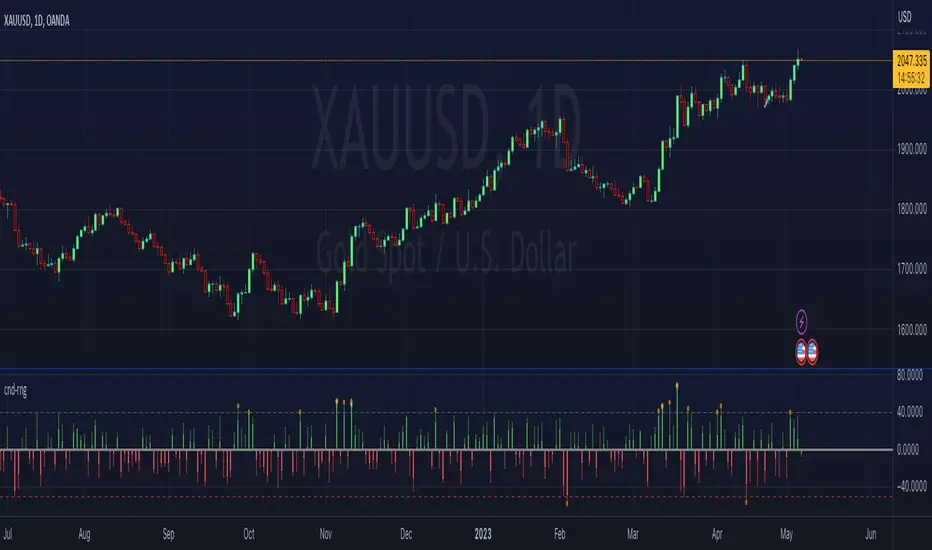
ka66: Candle Range IndicatorVisually shows the Body Range (open to close) and Candle Range (high to low).
Semi-transparent overlapping area is the full Candle Range, and fully-opaque smaller area is the Body Range. For aesthetics and visual consistency, Candle Range follows the direction of the Body Range, even though technically it's always positive (high - low).
The different plots for each range type also means the UI will allow deselecting one or the other as needed. For example, some strategies may care only about the Body Range, rather than the entire Candle Range, so the latter can be hidden to reduce noise.
Threshold horizontal lines are plotted, so the trader can modify these high and low levels as needed through the user interface. These need to be configured to match the instrument's price range levels for the timeframe. The defaults are pretty arbitrary for +/- 0.0080 (80 pips in a 4-decimal place forex pair). Where a range reaches or exceeds a threshold, it's visually marked as well with a shape at the Body or Candle peak, to assist with quicker visual potential setup scanning, for example, to anticipate a following reversal or continuation.
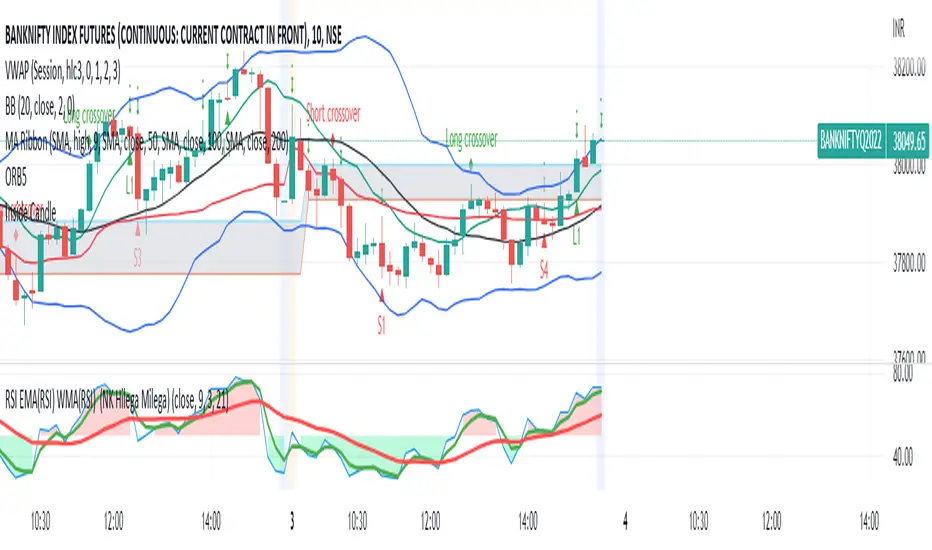
Inside CandleThis is a inside candle strategy based trading identifier. The basic idea is this
1. It will identify entry point if the previous candle was fully engulfed under the one previous
2. Then depending on the trend and your other indicators/thought process - you can take an entry
3. It is normally a good idea to keep the low of the bigger candle as your SL
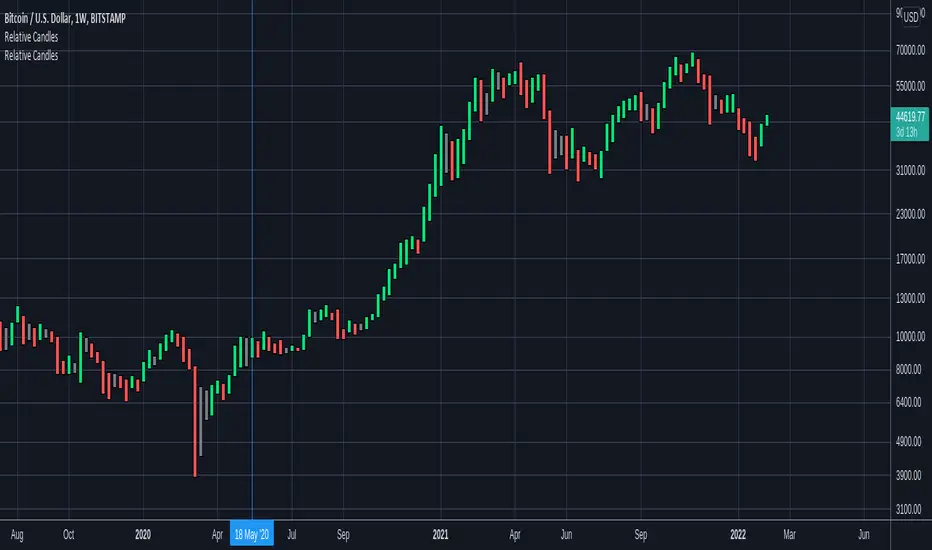
Relative CandlesCustom candles which only didsplay highs and lows. Color depends on relative position of highs and lows and indicates whether it is going up, down or indecision based on this relative position. Made specially for superchiqui :P
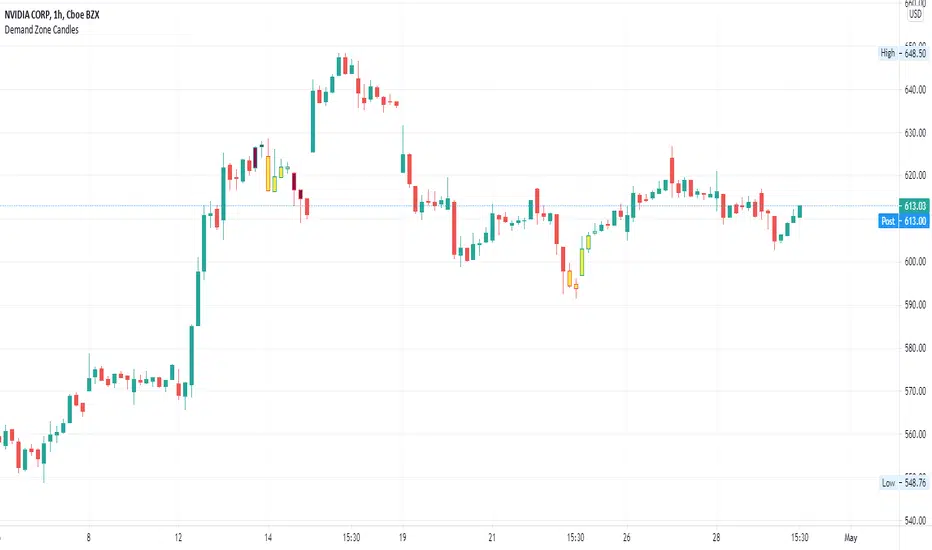
Supply/Demand Zone CandlesThis is a Pine Script to do a basic scan for demand zones and supply zones based on a Leg-Base-Leg-Base pattern.
Yellow candles define a Demand Zone.
Maroon candles define a Supply Zone.

Harris Triple Impulse Candle Detector Triple impulse candle detector system. Indicator uses size multiplier, volume multiplier and body to mick ratio, to calculate the size of its impulse

First Historical Candle Date daily intervalIndicator that displays a first historical candle on daily interval as a table at a top-right corner

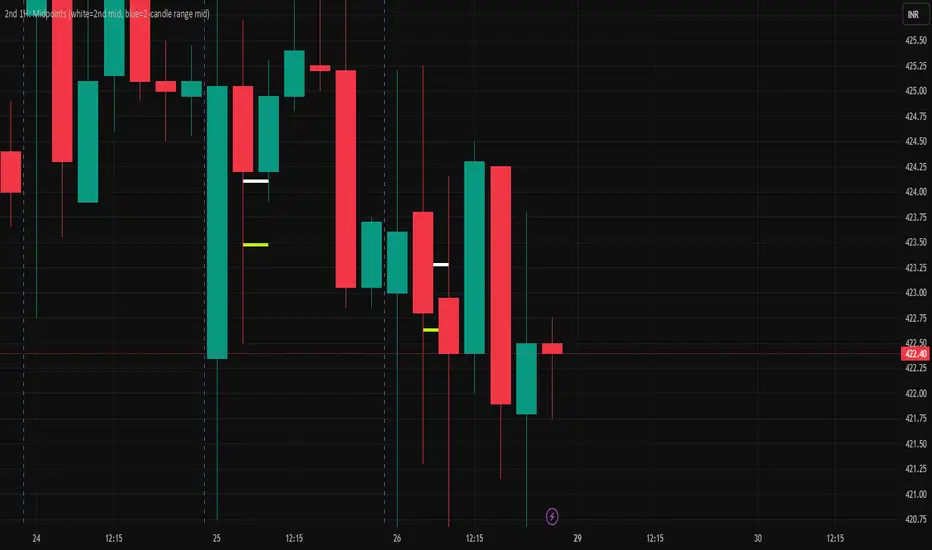
2nd 1H: Midpoints (white=2nd mid, blue=2-candle range mid)2nd 1H: Midpoints (white=2nd mid, blue=2-candle range mid)
5 AM NY 4H Candle High/LowThis indicator identifies the 4-hour candle that starts at 5:00 AM New York time (NYT) and automatically plots its high and low on intraday charts (e.g., 15m, 30m, 1H).
It helps traders:
Highlight a key session window often associated with increased market activity.
Use the 5AM–9AM NYT range for breakout, reversal, or liquidity zone strategies.
See clean horizontal levels that can act as support or resistance throughout the trading day.
🧠 Key Features:
Works on any timeframe below 4H.
Automatically detects and updates daily.
Optional labels to mark the range visually.

First and Last Candle HighlightSimple indicator that colors the 8:30 am Morning open candle, 3pm close candle and overnight 12:00am candle for ES as a quick reference for ICT strategies or any other strategies that provide added confluence to your style of trading. the time is set to UTC -5 for chicago time but im sure it will auto adjust for any other time zone if not message me and i will leave the script open for you to edit to your liking
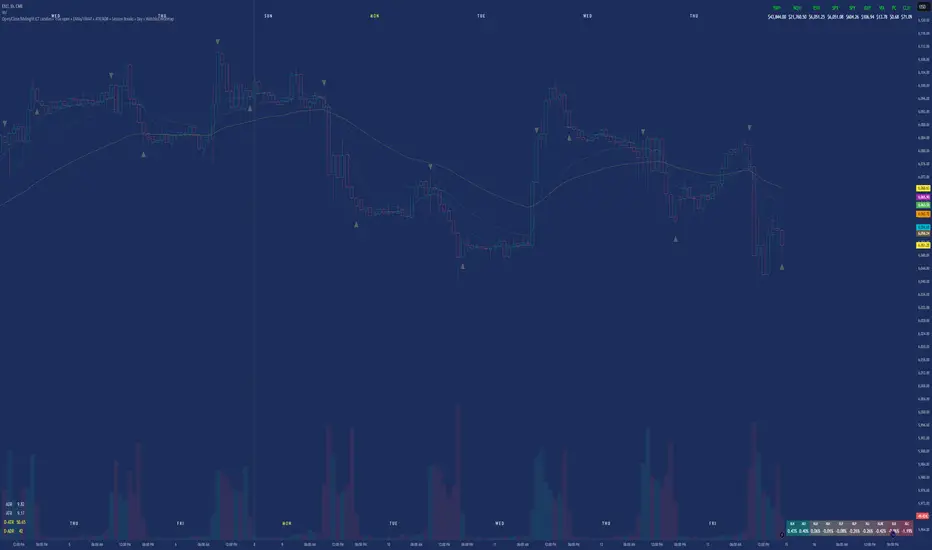
Vertical Line at nth Previous CandleThis code is a Pine script for TradingView that plots a vertical line on the chart n bars away from the current candle on the current time frame. The number of bars and line color can be customized by the user using input fields. The script calculates the highest and lowest price on the chart for the past n bars, and then draws a vertical line at the target bar with the specified line color. The previous line is removed and the ID of the new line is stored so that the next time the script is run, it can be removed and replaced with a new line. This script can be useful for marking important points on a chart or for visually tracking patterns or trends over time.

High timeframe Highs, Lows, Opens, Closes. HTF Candles displayPosting previously requested indicator.
Overlays higher timeframe high and low over the current bars - pictured is daily high and low overlayed on lower timeframe chart.
Can be set to fill between the open and close to show higher timeframe candles by color, with bullish or bearish fills
Very versatile and can be used to display weekly or monthly opens, or used to display previous weekly highs and lows for charting out possible liquidity points, etc.
Originally converted from Chris Moody's HLOC pine version 2 indicator.

Aggregate CandlesThis script creates candles based on an aggregated Index price from various exchange tickers. A lot of exchanges have specific flash crash wicks, missing data, erraticness compared to other exchanges particularly in their first few months, this is an attempt to clean up the price history, be it for TA ( trendlines , S/R etc.) or use in algos or other indicators, without reliance on one exchange. It uses the new Array functionality to generate median and averages, and is entirely original work. This particular version is a generic version of the BTC version. Please read the header before use, and if you do wish to use the code, please ask permission first.

Pin Bar CandlesPin Bar Candles can be used for identifying reversal points with the help of support and resistance

No Shadow Candles - Alertsalert script to detect candles with no wick, for testing.
scripted on request.
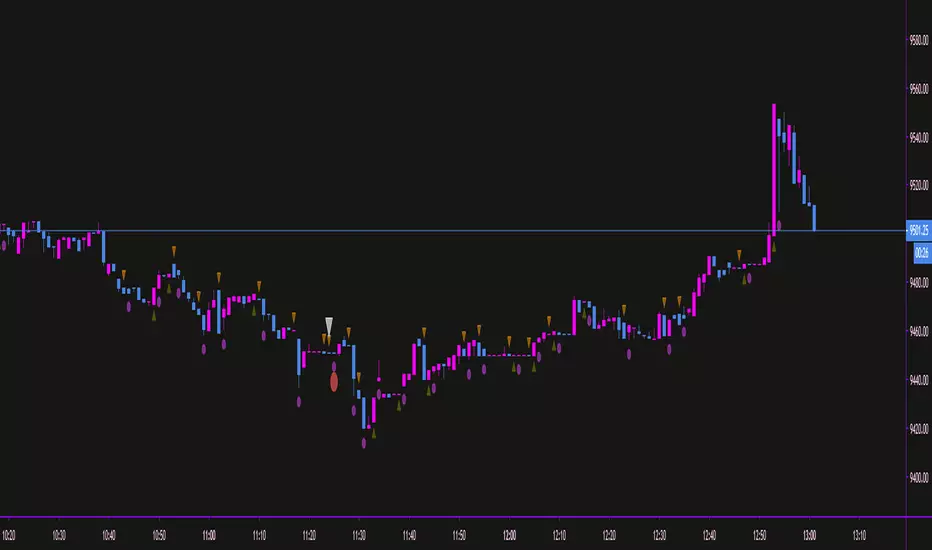
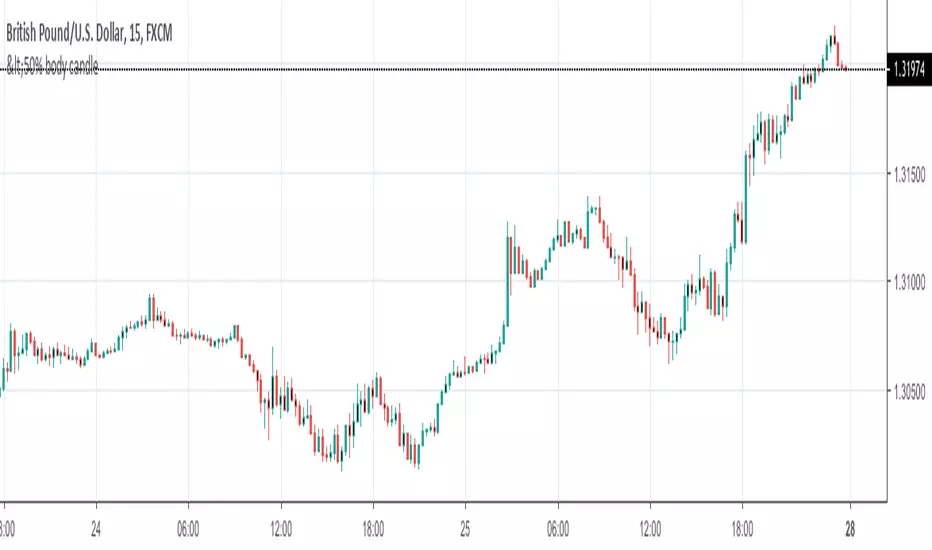
<50% body candleThis Script shows the candle whose body is less than the full candle and is shown in black color
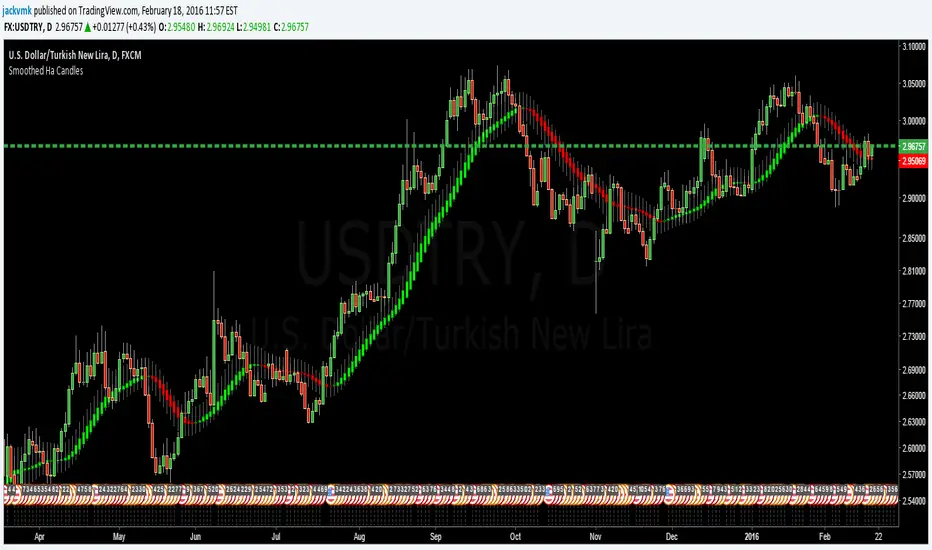
Sagar sir - N Continuous candle green with +ve % changeThis script will plot labels based on N number of continuous green candle with +ve % change.

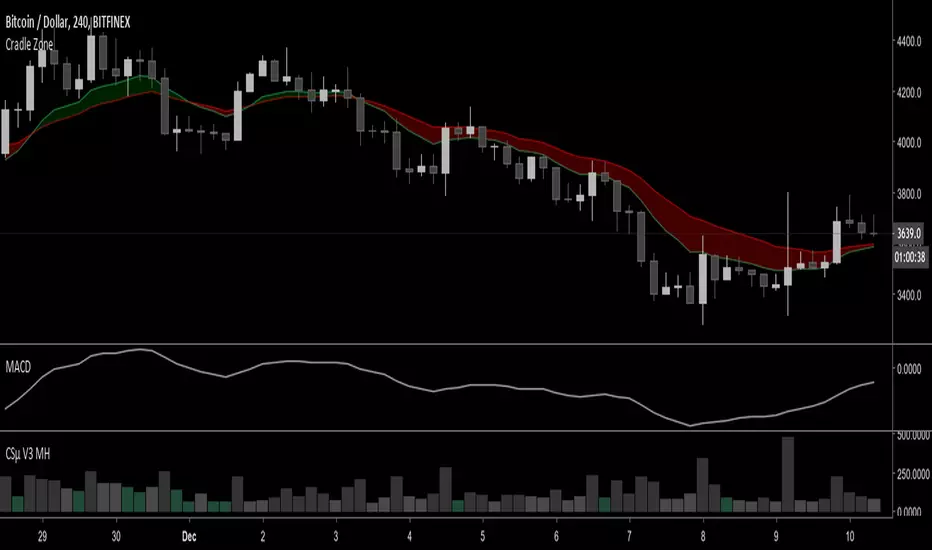
Small candle/Stop Gap indicator MHThis script has a different setting for the stop gap vs the candle size
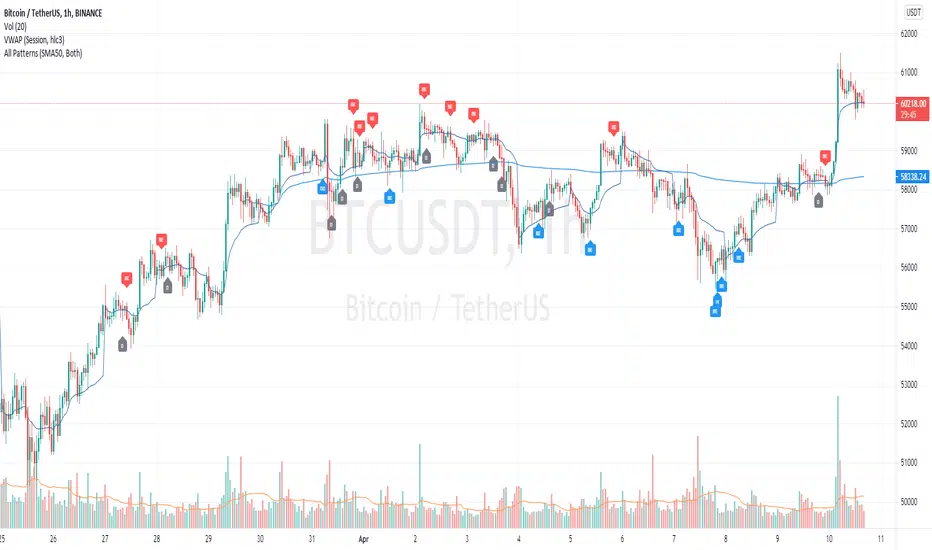
*All Candlestick Patterns* Tiny VersionThis is just the *All Candlestick Patterns* script with tiny labels. Also an excuse to test the script publication .. but you will find this version much less annoying
Identificador de Candlestick PT-br (updated 27/05/19) -whande1Identificador de Candlestick PT-br (updated 27/05/19) -whande1
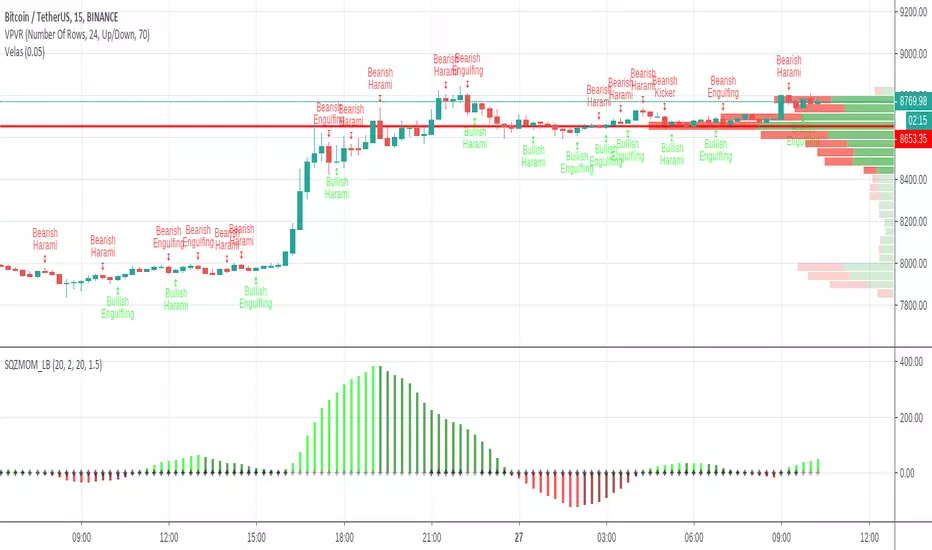
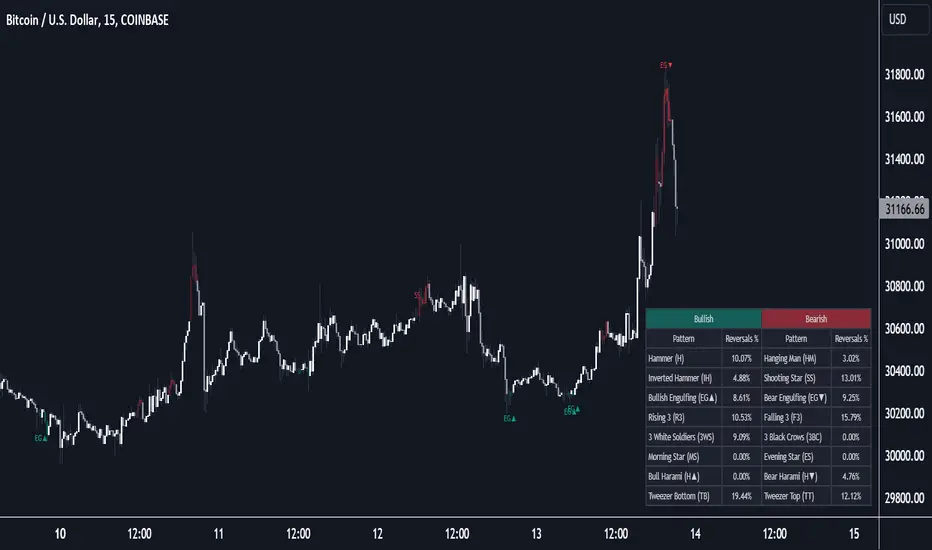
Reversal Candlestick Structure [LuxAlgo]The Reversal Candlestick Structure indicator detects multiple candlestick patterns occurring when trends are most likely to experience a reversal in real-time. The reversal detection method includes various settings allowing users to adjust the reversal detection algorithm more precisely.
A dashboard showing the percentage of patterns detected as reversals is also included.
🔶 USAGE
Candlestick patterns are ubiquitous to technical analysts, allowing them to detect trend continuations, reversals, and indecision.
The proposed tool effectively detects reversals by using the confluence between candlestick patterns and a reversal detection method based on the stochastic oscillator, acting as a filter for the patterns. If a candlestick pattern occurs while conditions suggest a potential reversal then the pattern is highlighted.
The displayed candle coloring allows users to observe the reversal detection method, with colored candles indicating potential reversals.
Users wanting to detect longer-term reversals can use a higher "Trend Length" setting, this can however lead to an increased amount of displayed candlestick patterns.
To prevent false positives users also have control over a "Threshold" setting in a range between (0, 100), with values closer to 100 preventing candlesticks from being detected at the start of trends.
The "Warmup Length" serves a similar purpose, and aims to prevent sudden moves to be classified as reversals. Higher values of this setting will require trends to be established for a longer period of time for reversal conditions to be detected.
🔹 Dashboard
To evaluate the role of individual candlestick patterns as potential reversal signals relative to the proposed reversal detection method, a dashboard displaying the percentage of candlestick patterns displayed (that occur when a potential reversal is detected) over the total amount detected.
Hovering on the dashboard cells of the "Reversal %" column allows displaying the total amount of patterns detected.
🔶 CANDLESTICKS PATTERNS
This tool detects 16 popular candlestick patterns, each listed in the sub-sections below.
🔹 Bullish Patterns
Hammer - A bullish reversal pattern that forms after a decline, characterized by a small body at the upper end of the trading range and a long lower shadow.
Inverted Hammer - A bullish reversal pattern that forms after a downtrend, featuring a small body at the lower end of the trading range and a long upper shadow.
Bullish Engulfing - A bullish reversal pattern where a small bearish candlestick is followed by a larger bullish candlestick that completely engulfs the previous candle.
Rising 3 - A bullish continuation pattern that consists of a long bullish candlestick followed by three smaller bearish candlesticks and then another long bullish candlestick.
3 White Soldiers - A bullish reversal pattern consisting of three consecutive long bullish candlesticks, each opening within the previous candle's body and closing higher.
Morning Star - A bullish reversal pattern made up of three candlesticks: a long bearish candlestick, followed by a short candlestick, and then a long bullish candlestick.
Bullish Harami - A bullish reversal pattern where a small bullish candlestick is completely within a previous larger bearish candlestick.
Tweezer Bottom - A bullish reversal pattern identified by an initial bullish candle, followed by a bearish candle, both having equal lows.
🔹 Bearish Patterns
Hanging Man - A bearish reversal pattern that forms after an uptrend, characterized by a small body at the upper end of the trading range and a long lower shadow.
Shooting Star - A bearish reversal pattern that forms after an uptrend, featuring a small body at the lower end of the trading range and a long upper shadow.
Bearish Engulfing - A bearish reversal pattern where a small bullish candlestick is followed by a larger bearish candlestick that completely engulfs the previous candle.
Falling 3 - A bearish continuation pattern that consists of a long bearish candlestick followed by three smaller bullish candlesticks and then another long bearish candlestick.
3 Black Crows - A bearish reversal pattern consisting of three consecutive long bearish candlesticks, each opening within the previous candle's body and closing lower.
Evening Star - A bearish reversal pattern made up of three candlesticks: a long bullish candlestick, followed by a short candlestick, and then a long bearish candlestick.
Bearish Harami - A bearish reversal pattern where a small bearish candlestick is completely within a previous larger bullish candlestick.
Tweezer Top - A bearish reversal pattern is identified by an initial bullish candle, followed by a bearish candle, both having equal highs."
🔶 SETTINGS
🔹 Patterns
Group including toggles for each of the supported candlestick patterns. Enabled toggles will allow detection of the associated candlestick pattern.
🔹 Reversal Detection
Trend Length: Determines the sensitivity of the reversal detection method to shorter-term variation, with higher values returning a detection method more sensitive to longer-term trends.
Threshold: Determines how easy it is for the reversal detection method to consider a trend at an extreme point.
Warmup Length: Warmup period in the reversal detection method, longer values will require a longer-term trend to detect potential reversals.
🔹 Style
Color Candles: Enable candle coloring on the user chart based on the reversal detection method.
Use Gradient: Use a gradient as candle coloring.
Label Size: Size of the labels displaying the detected candlesticks patterns.
🔹 Dashboard
Show Dashboard: Display the dashboard on the user chart when enabled.
Location: Dashboard location on the user chart.
Size: Size of the displayed dashboard.